I’ve played through hundreds of games with female leads, and I can tell you this: not all of them actually let you control what matters.
You’re probably tired of clicking on articles that just list games with women on the cover. That’s not what you’re looking for. You want to know which games actually put you in control of the decisions, the combat, the build choices.
Here’s the thing: a female protagonist doesn’t mean much if you’re just watching her story unfold on rails.
This article breaks down the different genres of video games where you take direct control of a female protagonist’s actions and critical decisions. I’m talking about real agency.
We’re moving beyond simple lists. I’ll categorize games by their core mechanics so you can find the specific type of player agency and control you’re looking for.
I focus on what actually matters: core gameplay loops, character build diversity, and replay value. The elements that define a truly engaging, player-driven experience.
We’ll explore the key types of games that put you in the driver’s seat. Sprawling RPGs where your build choices reshape entire playthroughs. Tense survival horror where every resource decision could mean life or death. Roguelikes that demand you master their systems through repeated runs.
No fluff. Just the games that give you real control.
Action-Adventure & Metroidvania: Mastery Through Movement and Combat
You know what separates a good game from one you can’t put down?
Control.
I’m talking about that feeling when you nail a perfect dodge at the last second. When your fingers know exactly what to do before your brain catches up.
That’s what action-adventure and Metroidvania games are all about.
Some people think these genres are just button-mashing festivals. They’ll tell you it’s all reflex and no strategy. That if you’re not into twitchy gameplay, there’s nothing here for you.
But that misses the whole point.
What Makes These Games Click
Sure, your skill with the controller matters. But it’s not just about fast reflexes.
It’s about learning. About getting better. About making choices that actually change how you play.
Take the modern Tomb Raider trilogy. You decide if Lara goes in guns blazing or sneaks through camps picking off enemies one by one. Your skill tree choices shape her into the kind of survivor you want to be.
Or look at Metroid Dread. Samus doesn’t just run and shoot. You’re constantly making split-second calls about which weapon to use, when to slide, when to counter. Every room is a puzzle you solve with movement.
I’ve played plenty of what type of returnalgirl game titles, and here’s what I’ve learned. The best ones give you control over every single action. No auto-aim holding your hand. No cutscenes taking over when things get intense.
When you win, it’s because you made the right call. When you die (and you will), it’s on you.
That’s the beauty of it. Your victories feel earned because they are.
Role-Playing Games (RPGs): Shaping Worlds Through Dialogue and Builds
You know that feeling when you’re staring at a dialogue wheel and your palms actually get a little sweaty?
That’s an RPG doing its job.
Some people say these games give you too much freedom. That all the choices just water down the story. They want a tight narrative where the writer stays in control.
I hear that argument. But here’s what they’re missing.
The best RPGs don’t give you meaningless choices. They give you the kind that stick with you after you’ve turned off the console.
When I play Mass Effect, I can still hear the weight in Shepard’s voice when I chose Paragon over Renegade. That soft chime that plays when you earn someone’s trust. The way the lighting shifts blue or red depending on how you’ve shaped your commander’s soul.
It’s not just about picking option A or B.
In Horizon Zero Dawn, I remember the satisfying snap of tripwires being set. The metallic screech of a Thunderjaw’s armor plating as my tearblast arrows rip it clean off. Every weapon choice changes how combat feels in your hands.
Character builds aren’t just stat screens. They’re how you tell the game who you want to be.
You allocate skill points and suddenly Kassandra moves differently through the world. Stealth builds make you notice shadows you’d normally ignore. Warrior builds make you crave the clash of metal on metal.
RPGs put you in the driver’s seat of someone else’s destiny. You decide if they’re merciful or ruthless. Diplomatic or blunt.
And yeah, sometimes you’ll second-guess yourself for hours after making a call.
That’s the whole point.
Narrative & Choice-Based Games: The Story Is Yours to Tell
You know that feeling when you make a choice in a game and immediately wonder what would’ve happened if you’d picked differently?
That’s the whole point here.
In narrative and choice-based games, decision-making is the gameplay. Everything else exists to support the choices you make and the consequences that follow.
Some people argue these aren’t “real” games because you’re not testing reflexes or mastering complex combat systems. They say it’s just interactive fiction dressed up with fancy graphics.
But that misses what makes these games special.
The control you have over the story is absolute. You’re not just playing through someone else’s narrative. You’re shaping it with every dialogue option and split-second decision.
Take Life is Strange with Max Caulfield. The time-rewind mechanic lets you see what happens when you choose differently. You can explore both paths before committing (though that doesn’t always make the choice easier).
Or Telltale’s The Walking Dead with Clementine. The game forces you into decisions where there’s no right answer. Just consequences you have to live with.
The mechanics are usually straightforward. Timed dialogue options pop up. Critical action choices appear. Save Person A or Save Person B. Tell the truth or lie.
What makes it work is the butterfly effect. Small choices ripple outward. A conversation you had in episode one changes who lives or dies in episode four.
That’s why I keep coming back to these returnalgirl version44 experiences. The replay value is built into the design. You finish one playthrough and you’re already thinking about the choices you’ll make differently next time.
You’re not just playing a game. You’re directing your own version of the story.
Roguelikes & Roguelites: Forging Success Through Failure
Every death teaches you something.
That’s what makes roguelikes different from every other returnalgirl game out there.
You’re not just replaying the same level until you memorize enemy patterns. You’re building knowledge that carries forward even when everything else resets.
Here’s what you get from this genre.
Each run gives you fresh combinations of weapons and power-ups. You learn which synergies break the game wide open and which ones leave you scrambling. That knowledge? It sticks with you.
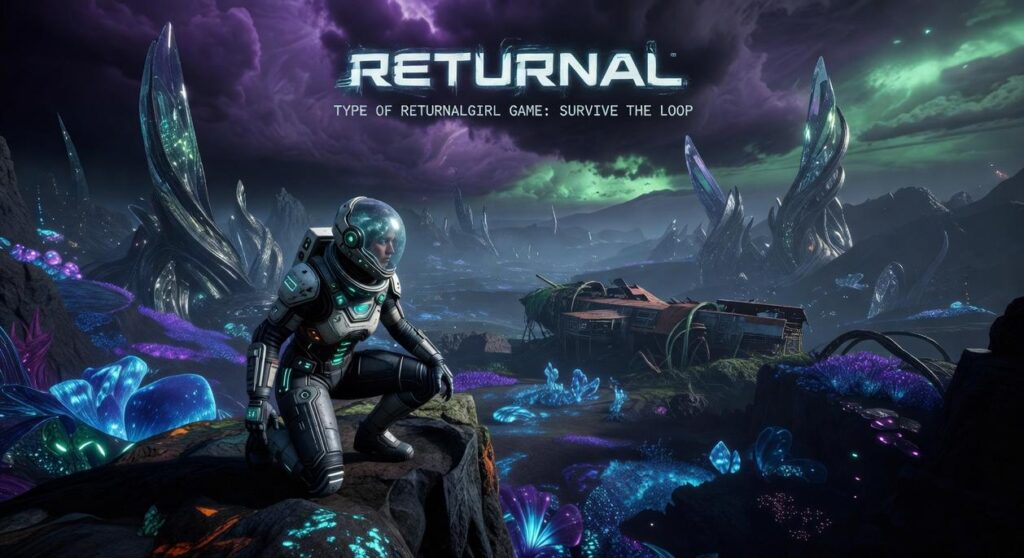
Take Returnal. Selene Vassos cycles through death after death, but you’re the one getting smarter. You start recognizing which weapon traits pair well together. You know when to push forward and when to explore for better artifacts.
Hades works the same way. The gods offer different boons every escape attempt. You experiment. You discover that Artemis’s critical hits combined with Aphrodite’s weak effects creates something special.
The real benefit isn’t just beating the game.
It’s that moment when everything clicks. When you see a weapon you’ve ignored for ten runs and suddenly understand how it fits into a build you’ve been theorizing. When muscle memory takes over and you’re making split-second decisions that would’ve killed you yesterday.
You’re not grinding. You’re learning.
And unlike games where failure means repeating the exact same content, here it means trying something completely new. Different paths. Different upgrades. Different strategies.
That’s why people sink hundreds of hours into these games and never get bored.
Survival Horror & Stealth: Where Every Decision Dictates Survival
You know that feeling when you’re down to three bullets and you hear footsteps?
That’s what defines this genre.
Some games let you feel powerful. They hand you weapons and tell you to go wild. But survival horror and stealth? They flip that script entirely.
Here’s the real difference. In action games, you decide how to win. In survival horror, you decide how to stay alive. Those are two very different things.
Think about it this way. When you’re playing a standard shooter, running out of ammo means switching weapons. When you’re playing ‘The Last of Us Part II’ as Ellie, running out of ammo means rethinking your entire approach to the next room.
Is that one bullet worth using on this enemy? Or do I save it for something worse around the corner?
Now compare that to pure stealth games. In something like ‘Alien: Isolation’ with Amanda Ripley, you’re not even thinking about bullets most of the time (because good luck shooting the Xenomorph). You’re thinking about sound. About whether that locker is safe or a death trap.
Every footstep you take is a choice.
The mechanics here aren’t about what you can do. They’re about what you can’t afford to do. Resource management becomes this constant mental calculation. Do I craft a health kit or a Molotov? Do I sneak past this group or risk the noise of taking them down?
And here’s what makes these games different from other returnalgirl game genres. The environment isn’t just scenery. It’s your best weapon. That table you can hide under. The bottle you can throw to create a distraction. The vent system you can crawl through.
Your agency comes from reading situations and making tactical calls under pressure.
Not from having better gear or higher stats.
A Diverse World of Control and Choice
You came here looking for games with female protagonists. What you found is something bigger.
These games aren’t one thing. They’re a whole spectrum of experiences across every genre you can imagine.
The real challenge was never about finding a game with a female lead. It was about finding the right kind of gameplay and agency that fits what you actually want.
Now you know the difference. A survival game gives you tactical choices about resources and risk. An RPG lets you shape the world through your decisions. An action game puts mastery of combat in your hands.
Each genre offers a different way to take control.
You can match what you’re craving to the experience that delivers it. Want to shape a story? You know where to look. Want to perfect a combat system? You’ve got options.
The perfect game is out there waiting for you to pick up the controller.