

I’ve spent thousands of hours breaking down game mechanics to figure out what makes a playthrough feel like art instead of just another checklist.
You’ve probably felt it. That pressure to follow the meta. To build your character the “right” way. To play how everyone else says you should play.
It kills the joy.
Here’s what I learned: games aren’t just systems to optimize. They’re canvases. Your choices, your builds, your approach to combat? That’s your brushstroke.
I call this interpretive play. It’s the difference between following a guide and creating something that’s yours.
Most gaming content tells you the optimal path. I’m more interested in the memorable one. The playthrough you’ll think about months later because it felt like you made something.
This article shows you how to approach games as art. We’ll look at character builds that express who you are as a player. Combat strategies that feel personal. Goals that matter to you, not some tier list.
I’ve dissected roguelikes down to their atoms. I know what separates a technically perfect run from one that sticks with you.
You don’t need to abandon optimization. You just need to know when to let your own vision take over.
Let’s talk about how you turn play into expression.
Beyond the Meta: Defining Your Personal Playstyle
You’ve probably heard it a thousand times.
Use the meta build. Pick the S-tier weapon. Follow the guide.
And sure, that works. You’ll clear content. You’ll win matches. You’ll check boxes.
But here’s what nobody talks about.
Playing the “right” way can feel hollow. Like you’re just following someone else’s script instead of actually playing the game.
Some players say the meta exists for a reason. They’ll tell you that ignoring optimal strategies is just making things harder for yourself. That you’re wasting time reinventing the wheel when someone already figured out the best path.
They have a point. I’m not going to pretend otherwise.
But what they miss is this: games aren’t just about efficiency. They’re about expression.
I call this interpretive play. It’s when you consciously choose your priorities before you even load in. Are you here to tell a story? To master a specific mechanic? To create something that looks incredible?
This is different from meta-chasing, which is just following the statistically best path without asking why.
Let me give you an example from my own sessions. Instead of picking whatever weapon has the highest DPS, I’ll do a thematically consistent run. I’ll create a character concept first (maybe a scrappy survivor who only uses scavenged tech) and then stick to weapons that fit that vision.
It’s a self-imposed constraint. But that limitation actually opens up creativity.
Think of yourself as a Combat Choreographer who cares about flow over damage numbers. Or a Narrative Realist who makes choices based on what your character would actually do, not what gets the best outcome.
The Returnalgirl approach to playing isn’t about ignoring what works. It’s about deciding what working means to you first.
Then building around that.
Case Study: The Roguelike as a Stage for Performance
Most players approach roguelikes the same way.
Get in. Clear the room. Get out. Repeat until you win or die.
It’s all about efficiency. Max your DPS. Take the meta build. Speed through encounters like you’re clocking in for a shift.
And honestly? I used to play that way too.
But here’s where I disagree with that whole mindset. Treating every run like a spreadsheet optimization problem misses what makes roguelikes actually interesting.
Some players will tell you that anything other than the fastest clear is a waste of time. They’ll say style over substance gets you killed. That if you’re not running the highest damage output, you’re playing wrong.
I think that’s boring as hell.
What if you treated each combat encounter like a performance instead? Not just something to get through, but something to execute beautifully.
This changes everything about how you approach a run.
Instead of racing to delete enemies, you start thinking about movement and flow. Can you clear this room with perfect dodges? Can you parry every attack and never take a hit?
The outcome matters less than how you get there.
I started experimenting with this on returnalgirl on pc. Instead of grabbing whatever had the biggest damage numbers, I’d build around mechanics that looked cool or felt smooth.
You start combining abilities for visual impact rather than pure efficiency. Maybe that skill combo doesn’t top the damage charts, but watching it play out? That’s the point.
Take what I call “The Untouchable Ghost” build. It’s built entirely around invisibility, teleportation, and status effects. Your kill times are slower. Way slower than the meta builds.
But the goal isn’t speed.
The goal is clearing a high-difficulty room without ever getting targeted. You’re demonstrating complete mastery of stealth and control systems. You’re painting with the game’s mechanics instead of just using them.
Does it work for everyone? No. Some people genuinely enjoy the optimization game, and that’s fine.
But for me, this approach turned roguelikes from a grind into something I actually look forward to. Each run becomes a chance to try something new, to see if I can pull off something that feels impossible.
That’s worth more than shaving thirty seconds off my clear time.
Character Builds as a Narrative Tool
I’ll be honest with you.
The first time someone told me to stop min-maxing, I thought they were crazy. Why would I intentionally make my character weaker?
Then I tried it.
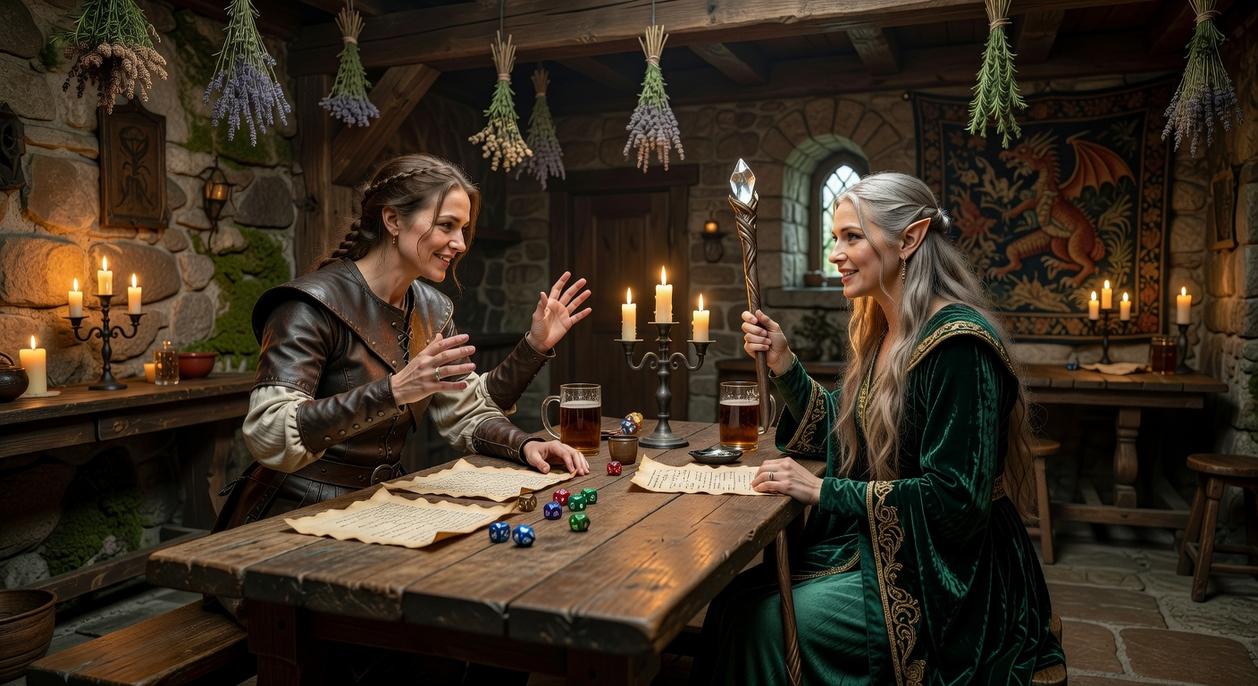
I built a mage who only used fire spells because she’d watched her village burn and became obsessed with controlling what destroyed her home. Suddenly every skill point mattered in a way it never had before.
Here’s what most guides won’t tell you. Your build is a story. Every piece of gear you equip and every skill you choose writes another line in your character’s biography.
Some players say this is just roleplaying nonsense that gets in the way of actually beating the game. They argue that optimal builds exist for a reason and anything else is just making things harder for yourself.
Fair point. For additional context, What Type of Returnalgirl Game covers the related groundwork.
But I think they’re missing something bigger. When you play a character with intentional quirks, the game opens up in ways you never noticed before.
Take an archer who refuses to use poison arrows for moral reasons. Yeah, you’re cutting out a damage type. But now you’re forced to get creative with positioning and timing. You start seeing opportunities you glossed over on your perfectly optimized run.
Or try a mage who only uses chaotic magic. No careful planning. No safe strategies. Just pure unpredictable energy that matches their unhinged personality.
This is where replay value actually comes from. Not from seeing every ending or collecting every item. From experiencing the same game through completely different eyes.
I’ve done a fallen knight run where I mixed holy and unholy abilities. That playthrough showed me combat interactions I’d never discovered in three previous runs as a pure paladin.
The goal isn’t to handicap yourself. It’s to align your choices with a concept that makes progression feel deliberate instead of mechanical.
When you’re playing as a character who has reasons for their decisions, every level up becomes a question. What would she choose here? How does this fit who he’s becoming?
That’s when the game stops being a checklist and starts being an experience.
Optimizing for Engagement, Not Just Victory
Here’s something I figured out after my third failed Returnal run.
Winning isn’t always the point.
I know that sounds weird coming from someone who writes about games. But stick with me here.
Back in 2019 when I first started really digging into roguelikes, I was obsessed with seeing those end credits. Every death felt like failure. Every reset made me want to quit.
Then something shifted.
I started setting my own goals. Could I beat this boss using only the Spitmaw Blaster? What if I ignored all health upgrades and focused purely on damage?
Suddenly the game opened up.
A win doesn’t have to be the end-credits screen. It can be successfully pulling off a complex combo for the first time. Or beating a section using only a weapon everyone says is trash.
These self-imposed challenges became my real game. They pushed me to engage with mechanics I’d completely ignored before. Systems I thought were useless turned out to be pretty interesting once I actually learned them.
This is what I call interpretive play (though you might just call it messing around). It transforms a finite game into something you can return to over and over.
Some players say this approach is just making excuses for not finishing games. That if you were actually good, you’d just beat it and move on to the next one.
Fair point.
But here’s what they’re missing. Once you’ve seen the credits roll, then what? You’ve exhausted the content the developers gave you. But if you’ve been building your own challenges along the way, you’ve got weeks of gameplay left.
Pro tip: Start small with your challenges. Don’t jump straight to no-hit runs. Try something like “complete this biome without using my favorite weapon” first.
The question isn’t really What Age Is Suitable for Returnalgirl Game. It’s whether you’re ready to play on your own terms.
That’s where the real replay value lives.
The Art is in the Interpretation
I’ve watched countless players follow the same build guides and wonder why their games feel hollow.
They win. But they don’t feel anything.
You came here because you wanted to understand what makes a game truly yours. Not just another checklist to complete.
The truth is simple. The returnalgirl version of playing isn’t about finding the one correct path. It’s about using game mechanics like a language to say something that matters to you.
Following guides gets you to the end. But it strips away the discovery. The moments where you figure something out on your own and feel that spark.
When you play with intention instead of instruction, everything changes. Each run becomes personal. You’re not copying someone else’s story anymore.
That’s when games stop feeling repetitive. When you realize the mechanics are tools for expression, not just obstacles to overcome.
Here’s what I want you to do: Start your next playthrough without opening a guide. Ask yourself one question before you make any choice.
What kind of player do I want to be?
Let that question guide you. Your build. Your strategy. Your approach to every encounter.
You’ll find more replay value in one intentional run than in a dozen optimized ones. Because this time, the game is actually yours.